
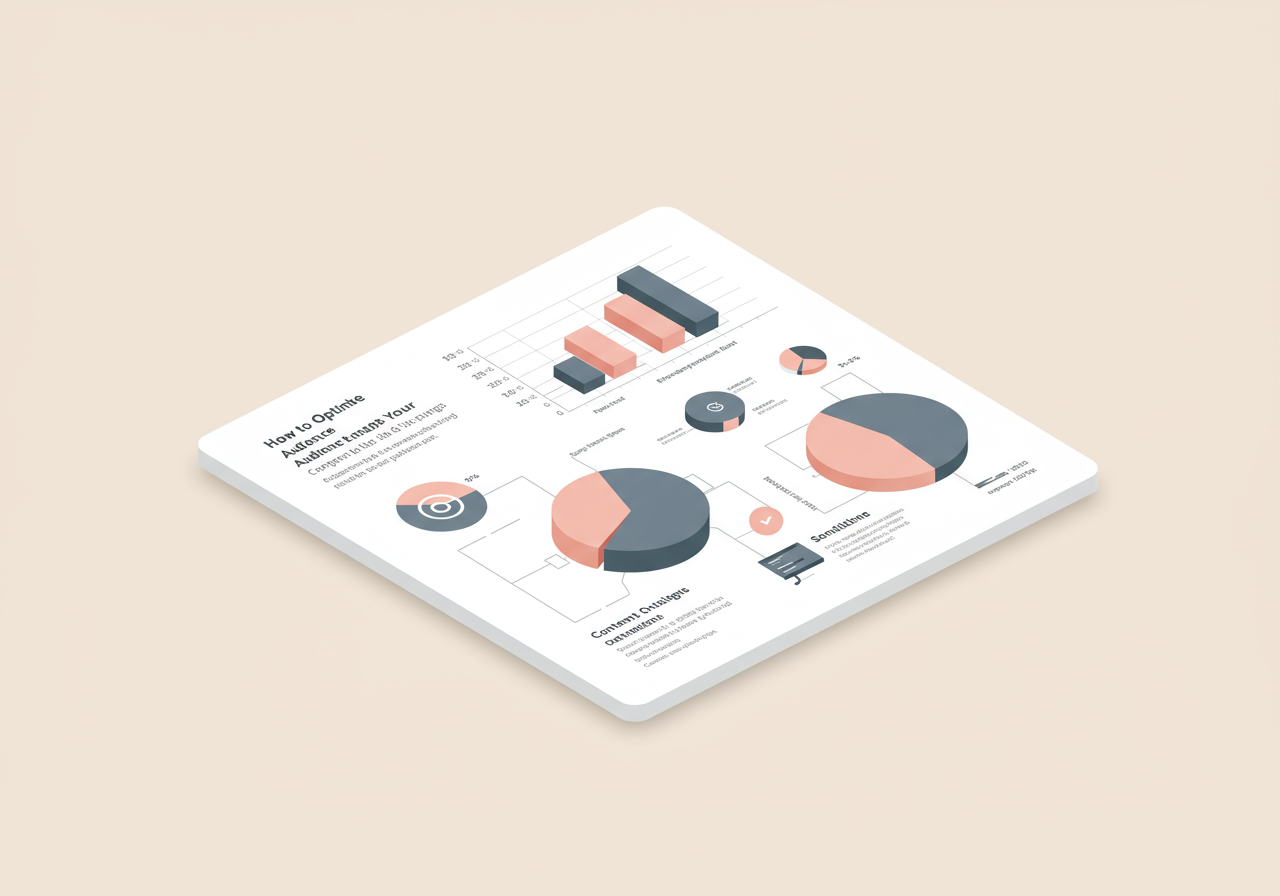
How to Optimize Your Audience Insights in Guide to Content
In today’s saturated digital landscape, creating content that truly resonates and drives results is more challenging than ever. Many businesses pour resources into content creation only to see it fall flat, generating minimal engagement or conversions. The missing link often lies not in the quality of the writing or production, but in a fundamental disconnect with the intended audience. To cut through the noise and build a loyal following, content creators must move beyond guesswork and embrace a strategic, data-driven approach. This comprehensive guide will walk you through the essential steps of how to optimize your audience insights for content, transforming your strategy from hopeful guesses to informed decisions that captivate your target market and achieve your business objectives.
Why Your Content Isn’t Landing
Have you ever spent hours crafting what you thought was the perfect blog post, only for it to receive lukewarm engagement? Or launched a social media campaign that barely registered a blip? You’re not alone. Many content creators find themselves in this frustrating cycle, pushing out content that, despite best efforts, simply doesn’t connect. The reasons are often multifaceted, but they almost always boil down to a fundamental misalignment between the content being produced and the audience it’s meant for.
One of the primary culprits is a reliance on assumptions. We often create content based on what we think our audience wants or needs, rather than what the data actually tells us. This can lead to generic messaging that fails to address specific pain points, answer pressing questions, or cater to unique interests. When content isn’t relevant, it gets lost in the endless scroll, becoming just another piece of digital clutter. Without a deep understanding of your audience’s motivations, challenges, and preferences, your content is essentially shouting into the void, hoping someone will hear.
Another common pitfall is a lack of clear targeting. In an attempt to appeal to everyone, content often ends up appealing to no one. A broad approach dilutes your message and prevents you from forging a strong connection with any particular segment. Your audience isn’t a monolithic entity; it’s comprised of diverse individuals with varying needs and stages in their buyer journey. Failing to segment and tailor your content accordingly means you’re missing opportunities for true content personalization. This is where the power of data-driven content truly comes into play, offering a precise antidote to the guesswork that often plagues content strategies.
Audience Insights: What They Are
Before we dive into how to optimize audience insights for content, it’s crucial to understand what these insights truly represent. Audience insights are far more than just surface-level demographics like age, gender, or location. While these data points provide a basic framework, true insights delve much deeper, uncovering the psychographics, behaviors, motivations, preferences, and pain points that define your target audience. They are the distilled understanding of who your audience is, what they care about, how they behave online, and why they make the decisions they do.
Think of it this way: demographics tell you who someone is; psychographics tell you why they do what they do. This deeper level of understanding is absolutely critical for effective content marketing strategy. For instance, knowing that your audience is primarily 30-45 year old professionals (demographic) is useful, but knowing that they are stressed by work-life balance, value efficiency, seek practical solutions to everyday problems, and prefer video content for learning (psychographic and behavioral) is transformative. These are the insights that allow you to create content that speaks directly to their inner world, addressing their needs before they even articulate them.
The distinction between raw data and actionable insights is also vital. Raw data is just numbers and facts; insights are the conclusions drawn from that data that can inform strategic decisions. For example, knowing that a particular blog post has 1,000 views is data. An insight would be understanding why that post performed well (e.g., it answered a specific question, used a compelling headline, or was shared widely by an influencer), and how that success can be replicated. By meticulously gathering and analyzing this information, you can move beyond generic content creation to a highly targeted, empathic, and ultimately more effective approach, making audience insights best practices content a cornerstone of your strategy.
Where to Find Your Audience Data
Unlocking the power of using audience insights for content begins with knowing where to look for the data. Fortunately, the digital world offers an abundance of sources, each providing a unique lens into your audience’s behavior and preferences. The key is to gather information from multiple channels to build a comprehensive picture, moving beyond isolated metrics to a holistic understanding.
One of the most foundational tools is Google Analytics. This platform provides invaluable data on how users interact with your website, including their demographics, interests, geographic location, the pages they visit, how long they stay, and their conversion paths. You can discover which content pieces are most popular, where users drop off, and the channels that drive the most traffic. Complementing this, Google Search Console offers insights into the actual search queries people use to find your site, revealing their intent and the exact language they use, which is gold for keyword strategy and content topic generation.
Social media platforms are also treasure troves of information. Facebook Insights, Instagram Insights, LinkedIn Analytics, and X (formerly Twitter) Analytics provide detailed demographic data on your followers, their engagement patterns, peak activity times, and the types of content they respond to most positively. You can see which posts generate the most likes, shares, comments, and clicks, helping you understand preferred formats (video, image, text) and topics. Beyond your own channels, conducting competitor analysis by observing their top-performing content and audience engagement can reveal gaps or opportunities in your own strategy. Furthermore, CRM data (Customer Relationship Management) from sales and customer service teams can offer qualitative insights into common customer questions, objections, and success stories, providing real-world context that quantitative data sometimes lacks. Finally, direct feedback through surveys, polls, and user interviews offers invaluable first-party data, allowing your audience to tell you directly what they want and need. Collecting and synthesizing these diverse data points is the first critical step in how to analyze audience insights effectively.
Making Sense of the Data
Gathering raw data is only half the battle; the real magic happens when you transform that data into actionable insights that can genuinely improve content with audience insights. This stage requires a systematic approach, a critical eye, and a commitment to understanding the «»why»» behind the «»what.»» Without proper analysis, even the most robust data sets remain just numbers, failing to inform a truly effective content optimization strategy.
The first step in making sense of the data is segmentation. Your audience is not a monolith. By segmenting your data based on demographics, behavior, interests, or even their stage in the buyer journey, you can identify distinct groups with unique needs. For example, a segment of new visitors might be looking for introductory content, while returning customers might seek advanced tips or product updates. Understanding these segments allows for targeted content creation and content personalization. Tools like Google Analytics allow you to create custom segments, and most social media platforms offer similar capabilities to filter audience data.
Next, look for patterns and trends. Are certain content topics consistently outperforming others? Do videos generate more engagement than blog posts on specific channels? Are there particular times of day or days of the week when your audience is most active? Identifying these patterns helps you understand preferred content formats, distribution times, and thematic interests. Don’t just look at the numbers; try to interpret what they mean. For instance, a high bounce rate on a specific page might indicate that the content isn’t relevant to the user’s initial query, or that the page load time is too slow. To synthesize these findings, many marketers create buyer personas. These are semi-fictional representations of your ideal customers, built from your data. A well-crafted persona includes demographics, psychographics, goals, challenges, and preferred content consumption habits. This humanizes the data, making it easier to empathize with your audience and tailor your content directly to their needs. By delving deep into these processes, you’re building a robust guide to optimizing audience data that will inform every aspect of your content strategy.
Content They’ll Actually Love
Once you’ve meticulously gathered and analyzed your audience data, the exciting part begins: translating those insights into content that truly resonates. This is where you leverage your understanding of how to optimize audience insights for content to craft pieces your audience will not only consume but actively seek out and share. The goal is to move beyond generic content and deliver highly relevant, valuable, and engaging experiences that foster loyalty and drive conversions.
Start by letting your insights dictate your content topics. If your Google Search Console reveals a consistent stream of queries around «»how to fix [specific problem],»» that’s a clear signal to create a detailed guide or tutorial addressing that exact issue. If social media analytics show high engagement with posts about «»industry trends,»» then a thought-leadership piece or an expert interview on the latest developments would be highly effective. Your audience’s pain points, questions, and aspirations, uncovered through your data, should be the bedrock of your content calendar. This direct alignment ensures your content is inherently valuable.
Next, consider the content format and channel. Your audience insights will often reveal preferences here. If your data indicates a strong preference for video content on Instagram, then investing in short, engaging video tutorials or behind-the-scenes glimpses makes more sense than long-form blog posts for that specific platform. Conversely, if your target audience on LinkedIn values in-depth analyses, then whitepapers, case studies, and detailed articles will perform better. This level of content personalization extends to the tone and language you use. If your audience responds well to an informal, conversational style, avoid overly corporate jargon. If they value authoritative, research-backed information, ensure your content reflects that professionalism. Finally, your insights should also inform your calls to action (CTAs). If your audience is primarily in the awareness stage, a CTA to «»download our beginner’s guide»» or «»read more»» is appropriate. For an audience ready to convert, a CTA like «»request a demo»» or «»start your free trial»» would be more effective. By systematically applying your insights, you’re not just creating content; you’re building a connection, making using audience insights for content the cornerstone of your success.
Quick Wins You Can Try Today
You don’t need to overhaul your entire content strategy overnight to start seeing the benefits of optimizing audience insights. There are several practical, quick wins you can implement immediately to begin leveraging your existing data and making your content more impactful. These actionable steps can provide immediate feedback and lay the groundwork for a more comprehensive content optimization strategy.
- Review Your Top-Performing Content: Dive into your Google Analytics or social media insights and identify your most popular blog posts, videos, or social updates from the past 6-12 months.
- Scrutinize Google Search Console Queries: Log into your Google Search Console account and look at the «»Performance»» report.
- Run a Quick Social Media Poll or Q&A: Use the polling or Q&A features on platforms like Instagram Stories, Facebook, or LinkedIn.
- Analyze Competitor’s Popular Posts: Use tools like SEMrush, Ahrefs, or even manual observation to see what content is performing well for your competitors.
* Analyze: What common themes, formats, or tones do they share? What specific questions did they answer or problems did they solve? * Action: Create more content similar to these high-performers. Can you update an old, popular post with new information? Can you create a «»part two»» or a series based on a successful topic? This is a direct application of audience insights best practices content.
* Analyze: Identify the exact search queries that bring users to your site, especially those with high impressions but lower click-through rates (CTRs). These indicate topics people are searching for, but your current content might not be perfectly matching their intent or your title/description isn’t compelling enough. Also, look for long-tail keywords that reveal specific user needs. * Action: Create new content specifically targeting these unanswered or underserved queries. Optimize existing content titles and meta descriptions to better match user intent for high-impression, low-CTR terms.
* Analyze: Ask direct questions about what challenges your audience faces, what topics they’d like to learn about, or what format of content they prefer (e.g., «»What’s your biggest challenge with X?»» or «»Would you rather see a video tutorial or a blog post on Y?»»). * Action: Use the responses to directly inform your next few content pieces. This is direct, first-party insight that can lead to immediate, highly relevant content.
* Analyze: Identify their most shared or commented-on pieces. What topics are they covering? What unique angles are they taking? * Action: Don’t copy, but use this as inspiration to identify gaps. Can you create a more comprehensive guide, offer a different perspective, or address a related but unaddressed problem? This helps you maximize audience data for content strategy by understanding the broader market.
By implementing even a few of these quick wins, you’ll start to see how effectively how to use audience insights for content can drive better engagement and provide a clear direction for your content efforts.
Keep Your Content Evolving
The landscape of digital content and audience behavior is not static; it’s a dynamic, ever-changing environment. Therefore, the process of optimizing audience insights is not a one-time task but an ongoing, iterative cycle. To maintain relevance, engagement, and effectiveness, your content strategy must continuously evolve alongside your audience. This commitment to continuous learning and adaptation is what truly differentiates leading content marketers.
A critical component of this evolution is continuous monitoring and analysis. Your audience’s needs, preferences, and the platforms they frequent can shift rapidly due to new trends, technological advancements, or changes in their own life circumstances. Regularly review your analytics (weekly or monthly) to spot emerging patterns or declining performance. Are there new keywords gaining traction? Is a previously popular content format now seeing less engagement? Is a new social media platform becoming dominant among your target demographic? Staying attuned to these shifts allows you to proactively adjust your strategy rather than react to lagging results.
Furthermore, embrace A/B testing as a standard practice for your content. Test different headlines, calls to action, content formats, imagery, and even publishing times. A/B testing provides concrete data on what resonates most effectively with your specific audience, offering direct insights into their preferences. For example, you might test two different versions of an email subject line to see which generates a higher open rate, or two different blog post introductions to see which leads to a longer time on page. These micro-optimizations, guided by data, accumulate over time to significantly improve content with audience insights. Finally, foster feedback loops with your audience. Encourage comments, questions, and direct messages. Respond thoughtfully and use their input to refine your content. Conduct periodic surveys or focus groups to gather qualitative data that complements your quantitative analytics. This direct interaction not only provides valuable insights but also builds a stronger community and demonstrates that you genuinely value their input. By committing to this continuous cycle of monitoring, testing, and adapting, you ensure your content marketing strategy remains agile, relevant, and consistently effective in maximizing audience data for content strategy.
The journey to creating truly impactful content is fundamentally a journey of understanding your audience. It’s about moving past assumptions and embracing the rich, actionable data that surrounds us. By diligently learning how to optimize your audience insights for content, you unlock the power to craft messages that don’t just fill a space, but genuinely connect, inform, and inspire. From dissecting the reasons your content might be falling flat to meticulously gathering and interpreting diverse data points, and finally, translating those insights into engaging content, every step is crucial. Remember, this isn’t a one-and-done task; it’s an ongoing commitment to continuous learning, adaptation, and evolution. By consistently leveraging audience insights guide principles and embracing data-driven content, you’ll not only achieve your content marketing goals but also build lasting relationships with an audience that truly feels seen and understood. Start today, iterate often, and watch your content transform from merely present to powerfully persuasive.